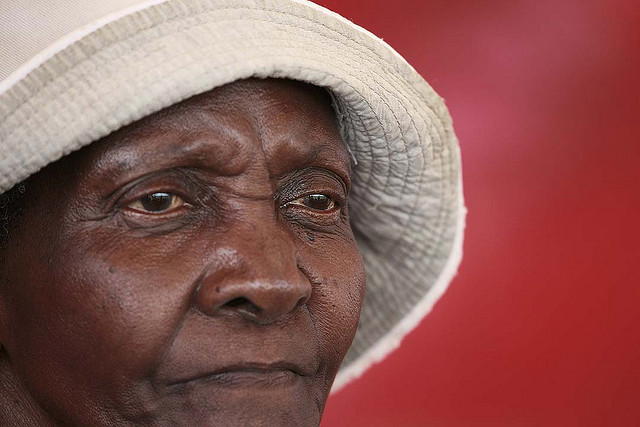
Addiction in the Elderly - Is Grandma Addicted?
Why do older people become addicts? What drugs are they likely to abuse? What to do if you suspect your beloved senior citizen relative is using drugs.

We don't often think of the elderly as becoming addicted to drugs. Why would somebody start a habit like that after living more than 70 years? Sure there are older people who have been abusing substances for many years, but it is hard to imagine grandma drinking herself to sleep every night after she has been the scion of the family for so many years.
But it happens. More often than we like to believe. So it becomes a hidden and potentially very serious problem. Anybody who loves an older person should know more about this problem.
What Substances Do the Elderly Abuse?
The oldest baby boomers are now 67 years old. They were the kids of the 60's who began the modern drug culture. The generation before that had alcohol as a respectable recreational drug. Most of the people over 70 years old who get caught in the web of addiction will use either alcohol or prescription drugs. It has been estimated that 10% of the women over 65 and 20% of the men over 65 drink more than is considered healthy.
People who grew up in the 30's and 40's were taught that alcohol and cigarettes were sexy. If you watch the movies from those years, you'll see what I mean. Think of Dean Martin of the "rat pack" fame. (OK, if you are unfamiliar, google it.) There was nothing wrong with having a martini before dinner, a few glasses of wine with dinner, and a "nightcap" before going to bed.
The Influence of Depression and Loneliness
But when you get in your 70's and beyond, life changes. Friends begin to disappear. There might be more loneliness, boredom and depression. In fact, depression is more common in the elderly than any other age group. There might be stresses of chronic pain. That might be physical pain, but it could also be psychological pain, such as when children live far away and do not keep in contact.
One big problem is that many elderly people now live on their own so the usage is easily undetected. Wanting to maintain independence, the older person will hide or not share their difficulties with the people they are close to. Other elderly have no problem sharing their pains, but can be viewed as constant complainers and consequently have their complaints ignored. It is difficult for loved ones to see past these obstacles.
Prescription Drugs and Medication Interactions
Older people often need to take other medications. This can contribute to the abuse of prescribed drugs, but it can also cause alcohol to be a problem. Many medicines interact with alcohol and make the effects of alcohol stronger. As people get older many become lax with their prescriptions, sometimes taking them, sometimes not. Or sometimes renewing the prescriptions, and sometimes just using what has been in the house for years. If the prescriptions are not working (because they are not being taken properly or not at all) it is more likely that he or she will turn to self-medication with alcohol.
Excessive alcohol use is not good for anyone, but it can be extremely dangerous for the elderly. Alcohol greatly increases the chance of stroke, dementia and other maladies. While it is true that some alcohol related dementia can be reversible after at least two months of complete sobriety, the brain damage from a stroke is less likely to be repaired. Also, falls are more dangerous for the elderly, and they are more likely to happen when inebriated.
How to Intervene - What to Look For
First, do not dismiss the possibility that grandma or grandpa have a drinking or drug problem. It might be unlikely, but it could happen. It even happens to the most unlikely people. And if it does the risks are great.
If your loved one is taking other medications on a regular basis, discuss whether or not there should be any drinking at all. Or even if there should be alcohol in the house. If it seems OK, talk about limiting the intake. It would be better if the drink is slowly sipped and always after a meal.
Warning Signs
- Be on the lookout for changes in sleeping patterns. These are usually brushed off since it is common for the elderly to have different sleep habits. Although healthy older adults sleep less, you should expect normal patterns.
- Look for changes in appetite, or complaints of nausea or vomiting. These can be easily caused by substance abuse.
- Frequent and unexplained falls are an important red flag. Even if it is not because of substance abuse it is a problem. But the possibility of substance abuse needs to be looked into right away. One explanation that might be heard is that there is just less strength so there are more falls. Well, the lack of strength can be from the use of a substance.
Intervening
- If you suspect something, first talk to your loved one. If there is a problem and you are lucky he or she will admit to it and you can look for help. More often, like addicts of other ages, there will be denial. Check the fridge. I have seen and heard many stories of water bottles filled with vodka and apple juice bottles filled with whiskey.
- Talk about the other medications. Check to see if the prescriptions are up to date. If mom or dad don't want to show you, you might have to check when they are not watching. I know it seems inappropriate to snoop in mom and dad's medicine cabinet, but you are doing it to save their lives. If you find that things are not quite right offer to do some medication monitoring. Offer to make sure the prescriptions are up to date. If you see some medicine that has an alcohol warning, talk about it.
- Don't be embarrassed to talk to their physician. Sometimes, especially with the pre-baby boomer population, the doctor is the trusted professional that is most likely to be listened to. Explain your concern. Mention the signs that you noticed and why you think there might be a problem. Tell the doctor that you want him or her to talk to your loved one about this.
Most importantly, do not give up. There is no reason for an 70, 80, 90 year old (or more) to suffer with an addiction problem.
Editor’s picks

Late-Onset Alcoholism – Alcohol Rehab for Older Adult
Late-onset drinking: The causes and consequences, the differences between late-onset and early-onset drinking and the unique treatment needs of older alcoholics.
7 Characteristics of Effective Addiction Treatment for Older Adults and Seniors
It's a given that older adults and seniors do better in treatment programs with peers of a similar age, but what else do you need to look for to find a great addiction treatment program that's going to work well for an older adult or a senior?
10 Barriers to Addiction Treatment for Older Adults
Older adults find it difficult to access good, knowledgeable and age-appropriate treatment programs. Here are ten major reasons why seniors are under served in this area.

Substance Abuse & Addiction Risk Factors for Older Americans
When older Americans use drugs it’s often for the same reasons that teenagers do: to cope, out of curiosity, and from a lack of passions. Feelings of mortality, boredom and loneliness are common precursors.

How to Support Addicted Loved-Ones without Enabling
You have to let them face their natural consequences, but does that mean there's nothing you can do to help? Fortunately, you CAN support without enabling and your assistance today can make a big difference for their tomorrow.